Näytetään tekstit, joissa on tunniste public transport. Näytä kaikki tekstit

maanantai 10. syyskuuta 2018

Tatra, or Couch Potatoes in the Mountains

Mountain landscapes of Štrbské pleso.
I probably have stated this before: we are no sportspeople. We will walk considerable distances in cities or maintained paths, but leave more demanding activities like, say, mountain biking, to others. The High Tatras - Vysoké Tatry in Slovakian - is a very suitable mountain destination for people like us. Of course, there's plenty to do there for hikers and mountaineers, too, but I am not the one to write about that.

The High Tatras are the highest part of the Carpathian mountains, and are divided by the border between Slovakia and Poland: the highest peaks of both countries are there. Most importantly the High Tatras are incredibly beautiful, whether viewed through a train window from the valley below or from the top of one of the mountains. See:

Tatra seen from the city of Poprad.
Lomnický štít (2634m, left) and Kežmarský štít (2588m, right) seen from Skalnaté pleso.
What makes the High Tatras particularly suitable for couch potatoes is the TEŽ, Tatra Electric Railroad. It has taken travelers up to the mountains from the city of Poprad for more than a century. A day ticket, allowing one to travel as much as one manages within a day, was 4€ in July 2018.

A TEŽ train in Tatranská Lomnica.
We stayed in Poprad, and took the train to the village of Štrbské pleso. The original plan was to get off at Popradské pleso and walk to Štrbské pleso from there - there apparently is a non-demanding hiking path connecting them. However, we changed our plans because the weather forecast promised rain and we knew that in Štrbské pleso we would not be too far from shelter. There was no rain. On the edge of village, there is a picture-postcard-beautiful mountain lake, around which there is a well-maintained, easy path.
The lake is surrounded by mountains.
Štrbské pleso - few vowels, plenty of views.
Hotel Panorama, the weirdest piece of socialist architecture in Štrbské pleso village.
The high point of our visit to Tatra  was a cable car ride to the top of Lomnický štít, 2634 meter above sea level (pun entirely intended). It involves no less than three cable cars. First is a small and scary one from Tatranská Lomnica to an intermediate station, where you change to a fancy and modern one, which in turn takes you to the Skalnaté pleso mountain lake. From there you continue in a tiny, completely terrifying cable car to the top. Even if you are, like us, afraid of heights, I warmly recommend it because of the incredibly amazing views. Being a sea-level dweller, I felt quite dizzy, not sure if it was because of vertigo or altitude sickness.

Up on the top we were almost swallowed in a cloud.
The light up high is different, or at least feels so.
We were advised to book the cable car tickets as early as possible. Since I didn't get the online booking system to work, we went quite early on a Sunday to inquire about tickets. The next available ones were for Monday afternoon. This was in late July, just as the busiest summer season in Central Europe was beginning. Weekends may be more busy. If you can't get tickets all the way up to Lomnický štít, or if you're unwilling to pay the undeniably steep price of 49€ per person for return ticket, consider taking tha cable car to Skalnaté pleso only. Advance bookings are not necessary there, and Skalnaté pleso with has beautiful views, reasonably-priced restaurant and some easy hiking paths. It's worth braking your journey there anyway, either going up, coming down, or both.

With the exception of  Lomnický štít cable car, the general price level in Tatras is pleasantly low compared to most of Europe: 10€ buys a good meal, with drinks, in most restaurants, the very tasty Slovakian beer is usually less that 2€ a pint, and even accommodation is affordable. We paid less than 30€/night for a room for 2, with bathroom, in Poprad.

We visited the High Tatras in July 27th to 31st 2018.

sunnuntai 22. lokakuuta 2017

What should you do in New Orleans?

You should go to New Orleans, and there you should...
...take a guided tour of a cemetery... 
...which are arranged, among others, by Save Our Cemeteries.
...listen to jazz...
...while sipping a cocktail.
....walk in the French Quarter (and Marigny, and Treme, and elsewhere).
...go paddlewheeler-watching on the riverfront.
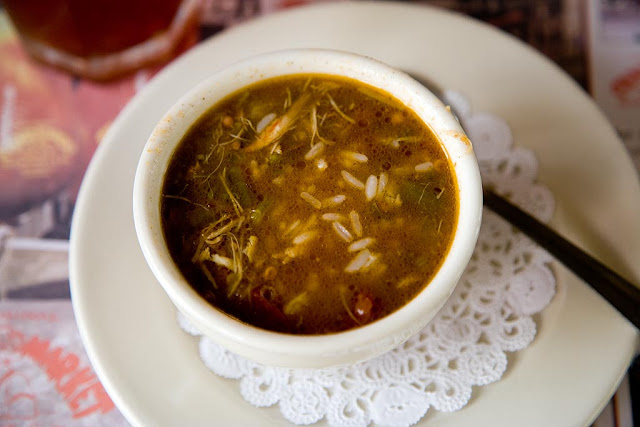
...eat gumbo, eat red beans & rice, eat po'boys, eat beignets, and, well, eat. Recommended places include Dooky Chase's, Gumbo shop and Coop's place, but it seems that there is no way to get bad food in the city. We ate everything before thinking of taking pictures, so this bowl of gumbo is from Wikimedia Commons. Picture by Elliot Lowe (CC BY 2.0).

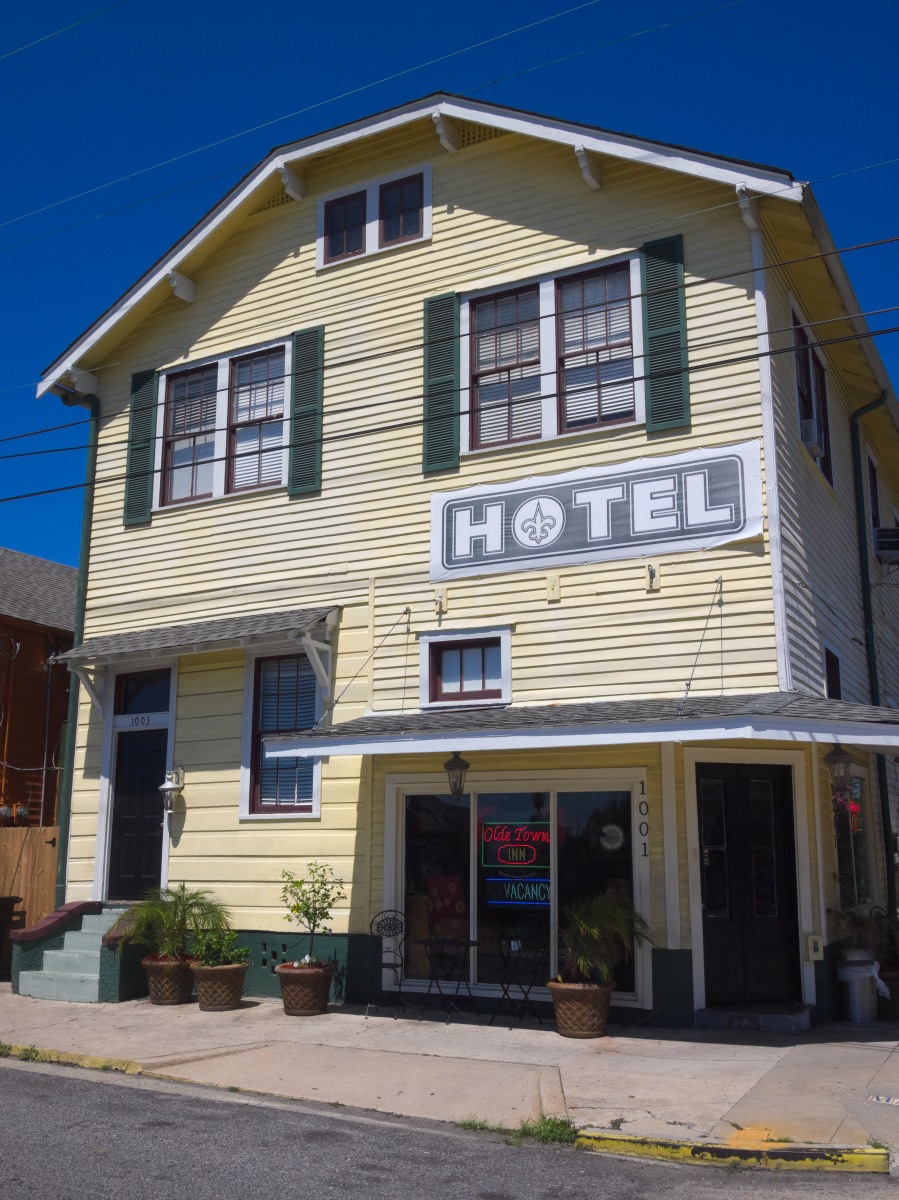
...stay in an old New Orleans house, like in Olde Town Inn as we did.
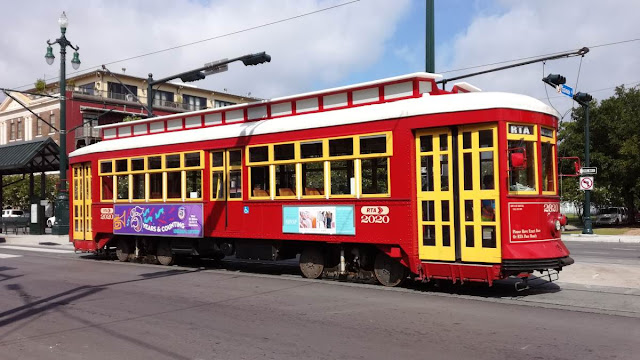
...ride streetcars.
...and go to Bourbon Street like everyone else, at least briefly.
Me kävimme New Orleansissa 22.-26.5.2017.

torstai 21. huhtikuuta 2016

San Francisco Rails

Cable cars are one of San Francisco's symbols.
The United States are promised land of private cars, and public transport is not always very functional. Some bigger cities, like New York and San Francisco, are an exception to this, with their very good transport systems. The one in and around San Francisco, while functional, is a bit complicated, with several operators and several different rail networks. Thankfully, Clipper card is accepted as payment across network. In addition to modern buses, trams and BART trains, there are early 20th century style transport available.
A cable car arrives at Market Street terminus.
The Cable Cars are probably the most famous way of transport in San Francisco. The car itself is not equipped with an engine at all: the traction is provided by moving steel cables underground, below the track. When leaving a stop, the driver, known as gripman, applies a mechanical switch to grip the cable and get the car moving. When stopping, he releases the grip and applies brakes to stop the car (a more detailed explanation provided by the Cable Car Museum).

Compared to more modern trams and trains, riding the Cable Car is, unsurprisingly, uncomfortable and bumpy. Its is also quite expensive, since the cars, being one of San Francisco's symbols, are very popular among tourists. That said, they are well worth experiencing, if only to observe the gripman's actions. I recommend riding a Cable Car to the Cable Car Museum. It is in a working Cable Car power station, and one can observe the cable-operating equipment at work (see video below),


There are, of course, old Cable Cars in the Cable Car Museum.

The tram line F is a regular San Francisco tram line, with frequent schedules, but it is operated exclusively by vintage equipment, more than 50 years old trams. Most cars are painted in vintage liveries from different cities across the United States, and even Mexico City and Milan. I noticed that one detail was omitted from the cars painted in the colors of Birmingham, Alabama: the markings that separated the compartments for "white" and "colored" people.

Despite their age, the F-line cars are equally comfortable - if not more - as the modern ones. There is no extra cost for riding the vintage trams on the F-line, any regular tickets valid on San Francisco Municipal Transportation Agency (MUNI) buses, trains and trams are good.

This PCC car used on the F-line is painted in a livery used in Los Angeles.
We rode the San Francisco rails in June 2015.

tiistai 19. huhtikuuta 2016

Muir Woods - very, very big trees

In the shadow of Redwoods.
Here I was born, and there I died. It was only a moment to you. You took no notice." - Alfred Hitchcock's Vertigo, 1958.

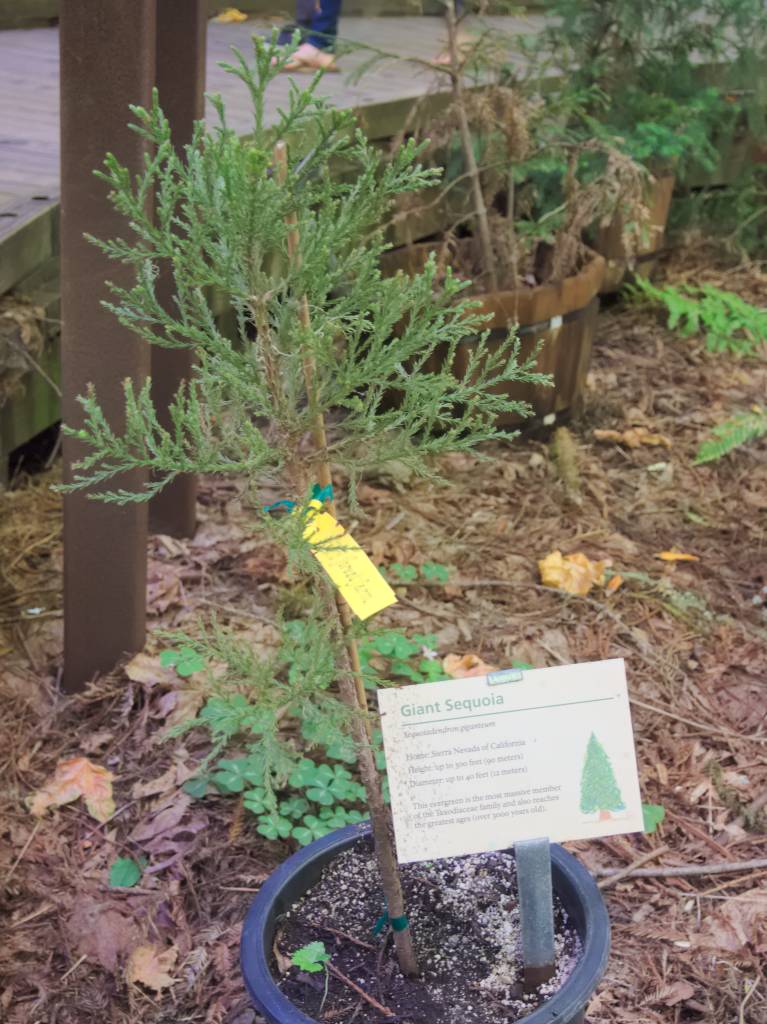
There is a lot of forest in Finland. Consequently, it may seem surprising that Finnish tourists travel all the way to California and go to see some trees. However, everything is bigger in America, including trees. The highest tree species of the world, California Redwood, and the biggest by volume, Giant Sequoia, grow in California. These are the biggest living creatures of the world, and among the oldest. Oldest living Giant Sequoia is about 3200 years old.
The very tallest trees are elsewhere, but you can see some really big ones in Muir Woods, too.
Yeah, they're tall.
The closest place to San Francisco to see these giant trees is Muir Woods National monument, one of the sites ran by the excellent National Park Service. Even for people who enjoy other things more than the Great Outdoors, Muir Woods is easily accessible: there are good signposted walk routes and information boards.
"When I grow up, I'll become a 100-meter Giant Sequoia".
The only drawback is common to many other U.S. National Parks: the place is a bit too popular. The footpaths get crowded, and the tourist hordes are sometimes unnecessarily loud. In Muir woods there were even signposts asking the visitors to be quiet in order not to disturb wildlife, but unfortunately many - I would say most - visitors ignored them. We visited on a Monday, but the site was very crowded, parking lots full and a lot of cars were parked dangerously by the narrow mountain road. We would advise against visiting on a weekend, if at all practical. Muir Woods is not the only place to see giant trees in California and the U.S. West Coast. Another popular spot is Wavona in Yosemite National Park. Muir woods is, however, one of the few Redwood and Sequoia forests practically accessible by public transport.
The overall ambience in the forest is tranquil, in spite of all the visitors.
Getting to places on public transport is sometimes laborious in the USA. Trip from San Francisco to Muir Woods is not particularly difficult, but it is slow, it may take more than two hours from city center and one should be prepared to wait when changing buses. From central San Francisco, first take a bus over Golden Gate Bridge to Sausalito or Marin City (for example bus number 70), or a ferry to Sausalito. Then take minubus 66 or 66F (only from April to October, timetables here) to Muir Woods. At least one can pay by Clipper Card in all buses and ferries.
If you're lucky you may see a traditional hippie VW bus when waiting for the bus.
Sausalito is a nice place to stop for a meal or ice-cream, there are a lot of options. Prices are on the expensive side but small town ambience is peaceful and relaxed. The sporty ones - not us! - may want to rent a bicycle from San Francisco: the ride to Muir Woods is demanding, long and hilly, but the views are great.

We visited big trees on June 30th 2015